
When should garage springs be replaced? Usually, the answer arrives before the door stops working altogether. A garage door that suddenly feels heavy, opens unevenly, makes a sharp bang, or will not rise more than a few inches may have a worn or broken spring. Because springs carry most of the door’s weight, this is not a repair to put off or attempt without the right training and tools.
For Seattle-area homeowners and business owners, a failed spring can turn a normal morning into a security problem, a missed appointment, or a vehicle trapped in the garage. Recognizing the early signs gives you time to arrange a safe repair rather than deal with an unexpected breakdown.
When Should Garage Springs Be Replaced?
Garage door springs should be replaced when they break, show clear signs of wear, no longer balance the door properly, or reach the end of their expected cycle life. There is no single replacement date that works for every property. Spring life depends on the spring type, door weight, installation quality, weather exposure, maintenance, and how often the door operates.
A standard residential spring is often rated for about 10,000 cycles. One cycle is one complete opening and closing of the garage door. For a household that uses the door twice daily, that can mean roughly seven to 10 years of service. A busy household that uses the garage as its main entrance may reach that limit much sooner. Commercial doors and high-use residential doors often need higher-cycle springs designed for more frequent operation.
Replacing a spring before it breaks can be a sensible choice when a technician finds severe corrosion, stretched coils, poor balance, or a spring that is near its expected cycle limit. However, age alone does not always mean immediate replacement is necessary. A professional inspection can determine whether the spring is still operating safely or whether replacement is the more reliable and cost-effective option.
Signs Your Garage Door Springs Need Attention
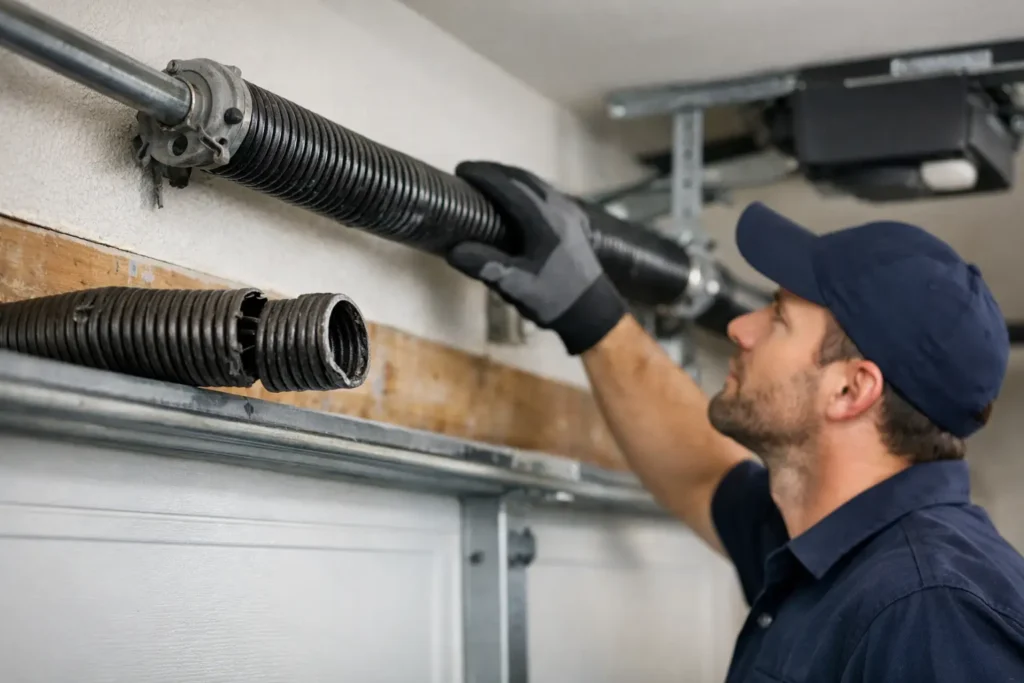
The clearest sign is a loud bang from inside the garage followed by a door that will not open normally. Torsion springs often break with a visible gap in the coil. Extension springs may stretch, hang loose, or look uneven. In either case, stop using the automatic opener. The opener is not built to lift the full weight of an unbalanced garage door and can be damaged if forced to do so.
Other warning signs can appear gradually. The door may open only partway, close too quickly, sit crooked in the opening, or feel unusually heavy when operated manually. You may also notice the opener straining, the cables becoming slack, or a jerky movement that was not there before.
Watch for these four symptoms in particular:
- The garage door feels heavy or cannot stay open when disconnected from the opener.
- The door opens unevenly, hangs at an angle, or leaves one side lower than the other.
- You hear squealing, grinding, or a sharp snapping sound during operation.
- The opener hums or runs, but the door barely moves or does not move at all.
Some of these problems can also be caused by damaged cables, misaligned tracks, worn rollers, or opener issues. That is why a proper diagnosis matters. Replacing springs when the underlying problem is elsewhere wastes money, while overlooking a weak spring can create a real safety risk.
Why a Broken Spring Is More Than an Inconvenience
Garage doors are heavy. Even an insulated residential door can weigh hundreds of pounds, while commercial and industrial doors may weigh significantly more. Springs counterbalance that load so the door can be lifted by hand and moved by the opener with relatively little effort.
When a spring fails, the door’s weight is no longer properly supported. Trying to lift it manually can cause injury, especially if the door shifts or drops. Trying to run it with the opener can strip gears, bend components, or pull cables off the drums. A partly open door may also leave your home, tools, vehicles, or business premises vulnerable.
Torsion springs are installed under high tension above the door. Extension springs run along the horizontal tracks and also store considerable energy. Both systems require specific procedures, correctly sized replacement parts, and specialized tools. For safety, keep people clear of the door, avoid pulling on cables or springs, and arrange service with a qualified garage door technician.
Torsion Springs vs. Extension Springs
Knowing which system your door uses can help you describe the issue when you call for service. Torsion springs are mounted on a metal shaft above the door opening. They are common on newer doors and generally provide smoother, more controlled operation. When one breaks, you can often see a gap of a few centimetres in the coil.
Extension springs sit on either side of the door, above the horizontal tracks. They stretch as the door closes and contract as it opens. These springs should always have safety cables running through them. If an extension spring breaks without a safety cable, it can become a dangerous projectile.
Both systems can be dependable when installed correctly. Torsion springs are often preferred for their balance and longevity, but the right choice depends on your door’s design, weight, available headroom, and usage. A technician should match the spring size and cycle rating to the actual door, not simply install the closest available part.
Should Both Garage Door Springs Be Replaced at Once?
If your door has two springs and one breaks, replacing both is usually the practical recommendation. They were installed at the same time and have handled the same number of cycles. The second spring may still be intact, but it is likely close to the same wear level.
Replacing the pair helps restore even balance and reduces the chance of another service call shortly afterward. It also allows the technician to inspect cables, drums, bearings, rollers, brackets, and the opener while the system is being reset. There are exceptions, such as when one spring was replaced recently or when the springs have different ages due to a previous repair. An honest assessment should explain the condition of each spring and the options available.
Can You Keep Using the Door Until Service Arrives?
The safest answer is no, particularly if a spring is broken or the door is visibly unbalanced. Do not repeatedly press the opener button in an effort to make the door move. Do not stand beneath a partly open door, and do not try to clamp, tie, or improvise a fix for the spring or cables.
If your vehicle is inside and the door will not open, a technician may be able to provide same-day or emergency assistance. For businesses, prompt repair is especially valuable when a disabled overhead door affects deliveries, equipment access, staff safety, or building security. Summit Garage Doors provides responsive spring service for residential and commercial doors throughout Seattle and nearby King County communities.
How to Help Springs Last Longer
Springs eventually wear out, but regular service can reduce avoidable strain. A garage door should be balanced, its moving parts should be lubricated with an appropriate garage door product, and its tracks, rollers, cables, and hinges should be inspected periodically. Keeping the door properly aligned prevents the springs and opener from compensating for friction or binding elsewhere in the system.
Avoid using the opener as a substitute for a repair. If the door starts shaking, slowing down, or sounding different, schedule an inspection before a small adjustment becomes a broken spring or damaged opener. For properties with frequent daily use, ask about high-cycle spring options. They cost more upfront but can offer better value when the door operates many times each day.
A working garage door should feel controlled, balanced, and predictable. If yours suddenly feels heavy, noisy, or unreliable, treat that change as a reason to get expert help. Prompt spring service protects the door, the opener, and the people who rely on it every day.

