
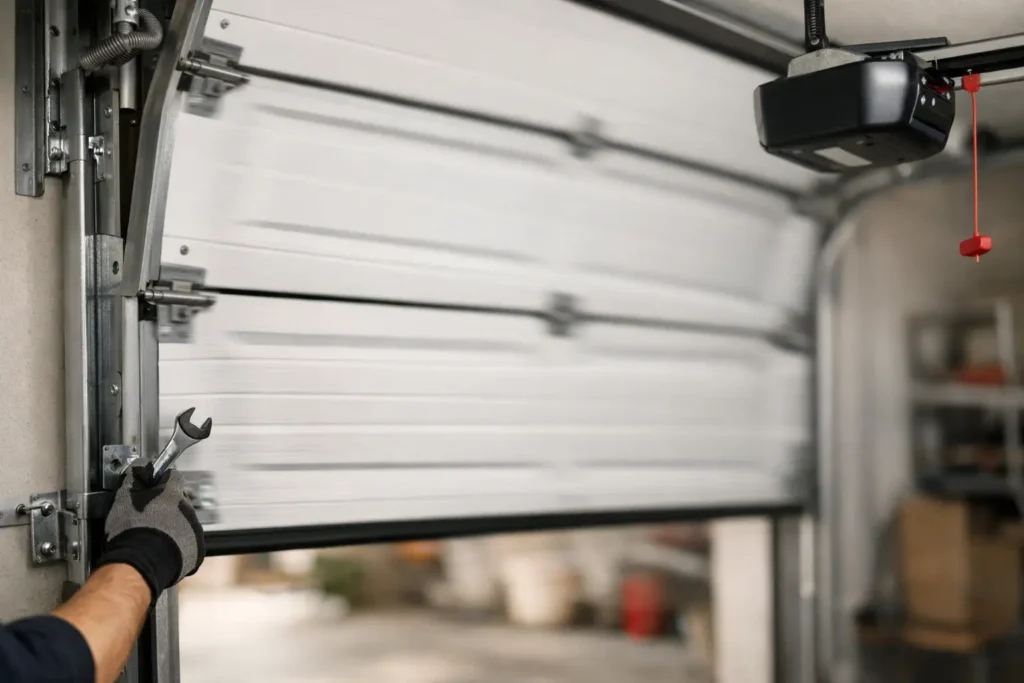
A garage door should travel smoothly and stay reasonably quiet from the moment you press the opener until it reaches the floor or ceiling. If you are asking, “why does garage door shake,” the answer is usually that a moving part has become worn, loose, misaligned, or unbalanced. The shaking may start as a minor vibration, but it can quickly put added strain on the opener, tracks, rollers, and springs.
A door that shakes is not always an emergency, but it should not be ignored. A heavy residential garage door can weigh well over 100 kilograms, and commercial doors can be much heavier. Identifying the cause early can often prevent a more expensive repair, a stuck door, or a safety concern.
Why Does a Garage Door Shake During Operation?
Garage doors move through a system of connected parts. Rollers follow the tracks, hinges allow each door section to bend, springs offset the door’s weight, cables keep both sides lifting evenly, and the opener guides the movement. When one part stops doing its job properly, the whole system can begin to shudder.
The timing of the shake offers useful clues. A vibration that happens all the way up and down may point to rollers, tracks, or loose hardware. Shaking near the top or bottom of travel can be caused by a damaged track section, an opener adjustment issue, or a door that is no longer balanced. If the door jerks to one side, stop using it until a technician can assess the cables, springs, and track alignment.
Worn or Damaged Rollers
Rollers are among the most common reasons a garage door vibrates. Older steel rollers can become noisy, dry, worn, or bent. Nylon rollers may wear down or crack over time. When a roller does not turn freely, it drags through the track rather than rolling smoothly, creating noticeable shaking and noise.
Look for rollers that wobble in their stems, appear chipped, or make scraping or grinding sounds. You may be able to see a roller moving unevenly as the door operates. Replacing worn rollers with quality parts can make a dramatic difference in both noise and smoothness, especially on older doors.
Bent, Dirty, or Misaligned Tracks
Tracks need to be clean, secure, and correctly aligned for the door to move safely. A track can be bent by a vehicle bump, impact from stored equipment, storm damage, or repeated stress from a poorly balanced door. Even a small bend can make rollers catch and force the door to shake.
Loose track brackets can create a similar problem. As the door moves, the track shifts slightly, allowing the rollers to bind. Dirt, hardened grease, small stones, or debris in the lower track can also interrupt the roller path.
Avoid trying to bend tracks back with a hammer. Garage door tracks must be positioned precisely, and a DIY adjustment can make the door bind further or come out of the track. Cleaning visible debris is reasonable, but bent or loose tracks call for professional alignment.
Loose Hinges, Brackets, or Fasteners
A garage door moves many times through changing Seattle temperatures and damp weather conditions. Over time, vibration can loosen hinge screws, track bolts, roller brackets, and the opener mounting hardware. The result may be rattling, shaking panels, or a door that appears to flex as it opens.
You can visually inspect accessible fasteners with the door closed. If you spot loose bolts on track supports or hinges, they may need tightening. However, do not touch the bottom roller brackets or any hardware connected to lift cables. These components are under high tension and can cause serious injury if released.
An Unbalanced Door or Failing Spring
A properly balanced garage door should feel much lighter than its actual weight because the springs carry most of the load. When a torsion spring weakens, breaks, or is incorrectly matched to the door, the opener has to work far harder. That extra force can make the door shake, hesitate, or move unevenly.
A simple balance check can help identify the issue. With the door fully closed, disconnect the opener using the emergency release cord only when the door is in a safe, closed position. Lift the door manually to about halfway. A balanced door should stay near that position with minimal movement. If it drops, shoots upward, feels extremely heavy, or cannot be safely lifted, reconnect the opener and arrange service.
Never adjust, wind, or remove garage door springs yourself. Springs store substantial energy, and spring work requires the right tools, training, and safety procedures.
Frayed Cables or Uneven Lifting
The cables on either side of the door work with the springs to lift it evenly. A frayed cable, loose cable, or cable that has slipped off its drum can cause one side of the door to rise faster than the other. This often produces sharp jerking, severe shaking, or a visibly crooked door.
Stop operating the door if you notice a loose cable, cable strands sticking out, or a door that hangs unevenly. Continuing to run the opener can pull the door out of its tracks, damage panels, or overload the motor. This is a repair best handled promptly by a licensed garage door technician.
Opener Problems and Incorrect Settings
Sometimes the door hardware is sound, but the opener is contributing to the vibration. A loose opener unit, worn drive gear, stretched chain, or damaged belt can transfer movement into the door. Chain-drive openers naturally make more noise than belt-drive models, but excessive shaking is not normal for either type.
Force settings can also be a factor. If an opener is set to push or pull with more force than necessary, it may jerk the door at the start or end of its travel. Travel limits that are set incorrectly can make the door hit the floor too hard or strain at the open position.
Opener adjustments depend on the model, so it is best to follow the manufacturer’s instructions or have a professional inspect the unit. Increasing force to make a struggling door move is rarely the right fix. The resistance causing the problem needs to be addressed first.
What You Can Safely Check Before Booking a Repair
A few basic checks can help you describe the issue clearly when you call for service. With the door closed, examine the tracks for visible damage and clear away loose debris. Listen for where the noise begins: near a roller, at the opener, or at one side of the door. Watch whether the door shakes equally across its width or pulls toward one side.
You can also apply a garage-door-specific lubricant to rollers, hinges, and springs if the parts are intact and accessible. Do not use heavy grease on the tracks. Grease attracts dirt and can create more binding. Lubrication may quiet dry metal parts, but it will not repair bent tracks, damaged rollers, worn bearings, or balance problems.
If the door has glass panels, is insulated, or is unusually wide, avoid repeated testing once shaking begins. Larger doors place more demand on every component, and persistent operation can turn a manageable repair into damage to the opener or door sections.
When Shaking Means You Should Stop Using the Door
Some vibrations are minor enough to schedule during regular maintenance. Others require immediate attention. Stop using the door and keep people clear if it is crooked in the opening, has come partly out of the track, slams down, reverses unexpectedly, makes a loud bang, or has a loose cable. The same applies if the opener strains, smokes, or hums without moving the door.
For a vehicle trapped inside, do not force the door open or disconnect cables in an attempt to free it. A qualified technician can determine whether the door can be secured and opened safely. Summit Garage Doors provides responsive repair support for homeowners and businesses dealing with urgent door issues in Seattle and surrounding King County communities.
Preventing Future Garage Door Vibration
Most shaking problems develop gradually, which makes preventive maintenance worthwhile. A professional tune-up can include roller and hinge inspection, track alignment, spring balance testing, cable inspection, fastener tightening, lubrication, and opener safety checks. This is especially useful before colder, wetter months, when corrosion and changing temperatures can expose weak components.
The right repair depends on what is causing the shake. Replacing only the opener will not fix a door with failing rollers, and lubricating a door will not correct a broken spring or bent track. A careful inspection protects the door, the opener, and the people who rely on it every day.
If your garage door has begun to shudder, make note of when it happens and avoid pushing it through repeated cycles. Prompt, professional service can restore smooth operation before a small vibration becomes a door that will not open at all.

