
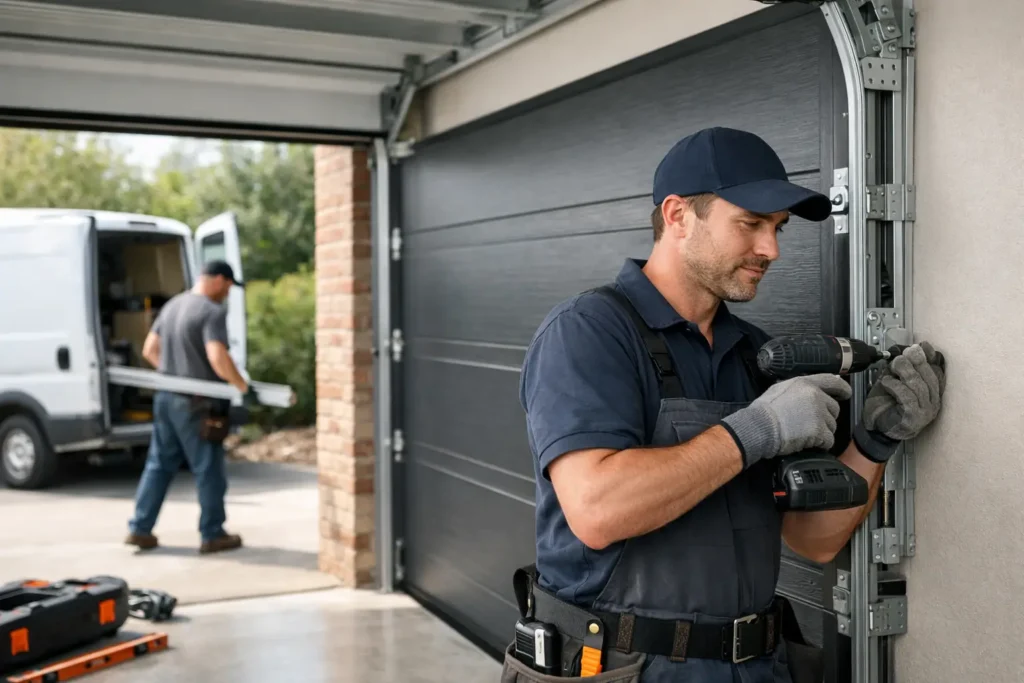
A garage door can be the largest moving part of your property, yet it is often only noticed when it stops working. A door that binds, shakes, leaks cold air, or will not close properly affects security, daily access, and curb appeal. Experienced garage installers do more than put a new door in an opening. They help make sure the door suits the building, operates safely, and holds up through years of regular use.
For homeowners, a replacement door may be a planned upgrade after years of wear. For a business, it may be a time-sensitive need after vehicle access, deliveries, or security have been disrupted. In either case, the right installation begins with an honest assessment of what the property needs rather than a one-size-fits-all recommendation.
What Garage Installers Should Assess First
The door itself matters, but a reliable installation depends on the complete system. Before recommending a style, material, or opener, a qualified technician should inspect the opening, framing, headroom, side room, tracks, springs, and existing electrical setup. Small measurements can determine whether a preferred door design will fit properly or whether changes are needed before installation day.
This is especially relevant in older Seattle-area homes, where garages may have uneven floors, limited clearance, ageing framing, or non-standard openings. Installing a new door without correcting those issues can lead to gaps, noisy operation, premature wear, and unnecessary service calls later.
A proper assessment should also consider how the garage is used. A detached garage used mainly for storage has different needs than an attached garage that opens several times a day. A commercial door serving a busy loading area needs components designed for higher cycles and more demanding operation. The best option depends on daily use, exposure to weather, security priorities, and budget.
The door material affects more than appearance
Steel remains a popular choice because it is durable, versatile, and available in many finishes and panel designs. Insulated steel doors can be a practical choice for attached garages, workshops, and spaces where temperature control matters. They also tend to reduce outside noise and create a more solid feel during operation.
Wood doors offer warmth and character, particularly on homes with traditional or custom architecture. They can be an excellent design choice, but they generally require more maintenance than steel or composite materials. In a damp climate, proper finishing and ongoing care are essential to protect the door from moisture damage.
Aluminum and glass doors create a clean, contemporary look and bring more daylight into a garage. They can work beautifully for modern homes, studios, or commercial spaces, though privacy, insulation, and glass durability should be discussed before making a final selection. There is no single best material. The right choice is the one that fits the property and the level of maintenance the owner is prepared to take on.
Choosing a Door That Performs in Local Weather
Rain, moisture, temperature swings, and wind can expose weaknesses in a poorly fitted garage door. Weather seals, bottom seals, track alignment, and insulation all play a part in keeping the garage protected. If the door does not sit evenly on the floor or the perimeter seal has gaps, water, leaves, pests, and cold air can find their way inside.
Insulation is worth considering even if the garage is not fully heated. It can help moderate the temperature near adjoining rooms, reduce condensation, and make a workspace more comfortable. Insulation ratings are useful, but they are only one part of the decision. A higher-insulation door may cost more upfront, so the value depends on how the garage is connected to the home and how often the space is used.
The installation quality matters just as much as the door’s advertised features. A door with premium insulation will not perform as intended if the opening is not sealed correctly or the panels are not aligned. Good workmanship protects the investment from the first day of operation.
Why the Opener, Springs, and Tracks Matter
A garage door is a balanced mechanical system. The opener does not lift the full weight of the door on its own. Springs counterbalance that weight, while rollers, hinges, cables, tracks, and brackets guide the door through each cycle. When one component is worn or incorrectly adjusted, the entire system can become unreliable.
For that reason, an installation should include more than mounting panels and connecting an opener. Technicians should set the spring tension correctly, secure the tracks, test the door’s balance, inspect safety cables and brackets, and confirm that the door moves smoothly by hand before relying on the motor. They should also test the photo-eye sensors and auto-reverse function so the door responds safely when an object is in its path.
Spring work deserves particular caution. Garage door springs store significant tension and should only be adjusted or replaced by trained professionals with the right tools. If a spring breaks, a cable comes off, or the door feels unusually heavy, stop using it and arrange service rather than forcing the opener to run.
When selecting an opener, consider noise, power, control options, and backup operation. Belt-drive openers are often preferred for attached garages because they run quietly. Chain-drive units can be a dependable choice for heavier doors or high-use settings. Smart controls allow owners to check door status and operate the system from a phone, but they should be installed with secure access settings and tested alongside the standard wall control and remote.
Questions to Ask Garage Installers Before Booking
A clear conversation before work begins helps avoid surprises. Ask whether the estimate includes removal and disposal of the old door, new tracks and hardware, weather sealing, opener setup, and final safety testing. It is also wise to confirm the expected timeline and whether the installer can address framing or electrical concerns if they are discovered during the project.
Ask about the warranty on both the door and the labour. Manufacturer coverage can vary between panels, hardware, finishes, insulation, and openers, while workmanship coverage reflects the installer’s confidence in the completed job. A trustworthy provider will explain what is covered in straightforward terms rather than relying on vague promises.
For commercial and industrial properties, ask about cycle ratings, replacement-part availability, planned maintenance, and emergency response. A door failure can interrupt staff access, shipments, and site security. Choosing equipment that suits the actual workload is often more cost-effective than replacing under-rated components repeatedly.
You should also expect practical advice, not pressure. A good installer will explain when a repair is sensible and when replacement offers better value. For example, a single damaged panel may be replaceable if the rest of the system is in good condition. But extensive rust, recurring track damage, outdated safety features, or repeated spring and opener problems may make a new door the more reliable long-term choice.
Installation Day Should End With Testing, Not Guesswork
On installation day, the work should finish with a complete walkthrough. The door should open and close evenly, seal against the floor, and operate without excessive vibration or scraping. The opener should be programmed, safety sensors checked, and remotes or smart controls demonstrated. Owners should know how to use the manual release and what warning signs require service.
This final testing is not a formality. It is how small issues are identified before they turn into avoidable damage. A properly installed garage door should feel controlled, quiet enough for its system, and dependable from the first cycle.
Summit Garage Doors helps homeowners and businesses choose, install, and maintain doors that match both their property and their daily demands. Whether you are replacing an ageing residential door, improving your home’s exterior, or keeping a commercial entrance operating safely, the most useful next step is a detailed on-site estimate. The right door is not simply the one that looks good on day one. It is the one that continues to protect, perform, and close with confidence every day after.

