
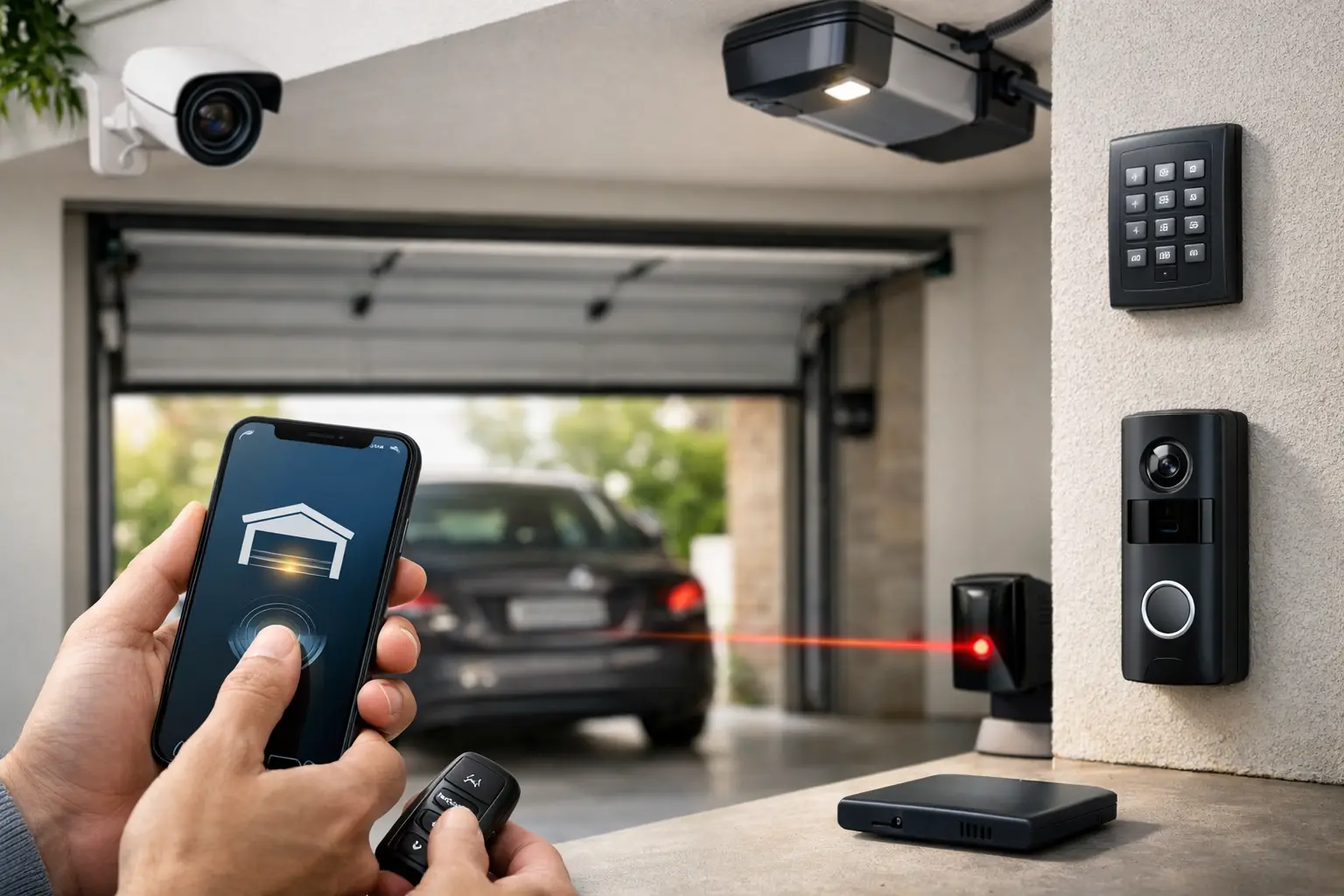
A garage door left open while you are at work is more than an inconvenience. It can expose tools, vehicles, storage, and a direct entry point to your home. The best smart garage upgrades give you a clearer view of what is happening at the largest moving door on your property, while making everyday access easier for family members, deliveries, and trusted service providers.
For Seattle-area homeowners, the right setup is not necessarily the one with the most features. It is the one that works reliably with your existing door, opener, Wi-Fi coverage, and daily routine. For commercial properties, the priority may be controlled employee access and fewer interruptions to operations. A smart upgrade should improve security and convenience without creating new reliability issues.
1. A Wi-Fi Smart Garage Door Opener
A smart opener is the foundation of most connected garage systems. It lets you check door status and operate the door from a phone app, often from anywhere with an internet connection. If you have ever turned around halfway through a trip because you could not remember whether the garage was closed, this upgrade addresses a very practical problem.
Many modern openers also provide activity alerts. You can receive a notification when the door opens, closes, or stays open longer than expected. Some models allow scheduled closing times, which can be useful when a busy household tends to leave early and return at different hours.
The best choice depends on the door’s size, weight, and use. A quiet belt-drive opener is often a good fit for an attached garage, especially if there is a bedroom above it. A heavier insulated door, a custom wood door, or a commercial application may need a more powerful system. Smart controls do not compensate for an undersized opener or worn mechanical parts, so the door should be balanced and operating smoothly before installation.
2. Add-On Smart Controls for a Compatible Opener
You may not need to replace a functioning opener to gain app-based control. An add-on smart controller can connect with many existing openers and provide remote operation, open-door alerts, and shared access through a mobile app.
This is often a cost-effective option for homeowners with a relatively new, dependable opener that lacks built-in Wi-Fi. Compatibility matters, though. Older units, certain proprietary control systems, and openers with damaged wiring may not support an add-on device properly. A professional assessment can prevent the frustration of purchasing a controller that cannot communicate reliably with your equipment.
Also consider the age of the opener itself. If it is noisy, reverses unexpectedly, struggles to lift the door, or has frequent sensor issues, replacing the complete system can be the more dependable investment. Smart convenience is valuable, but safe, consistent door movement comes first.
3. Real-Time Door Position Alerts
Door position alerts are one of the simplest smart garage upgrades, and one of the most useful. These systems tell you whether the door is open or closed and can notify you when its status changes. Some use an integrated opener sensor, while others use a separate sensor attached to the door.
The value is not limited to security. Alerts can help you confirm that children arrived home, verify that a contractor accessed the garage as planned, or catch an accidental opening before rain, wind, or overnight temperatures affect what you store inside.
Choose notification settings carefully. If every opening triggers multiple alerts, people often start ignoring them. A good setup sends meaningful notices, such as an opening during selected hours, an open door after a set time, or activity when the property is vacant. The goal is awareness, not a phone that constantly demands attention.
4. Smart Keypads and Temporary Access Codes
A smart keypad replaces the old habit of hiding a physical key or sharing one permanent garage code with everyone. It allows controlled entry without handing out remotes, and many systems let you create temporary or recurring codes for dog walkers, cleaners, relatives, tenants, and delivery needs.
For example, a homeowner can provide a code that works only on weekday afternoons. A small business can remove a former employee’s access without collecting a remote first. That level of control is especially helpful when the garage is used as a workshop, storage area, or secondary entrance.
There is a trade-off: access codes need regular management. Delete codes that are no longer needed, avoid easy combinations such as an address or birth year, and review who has access at least a few times a year. The keypad itself should also be mounted where it is convenient for authorized users but not easily exposed to damage or tampering.
5. Integrated Camera and Two-Way Audio
A garage camera can show you who is arriving, whether a delivery was placed inside, or what caused an unexpected door alert. Some smart openers include an integrated camera, while other systems use a separate camera positioned to view the door and garage interior.
Two-way audio can be useful when a family member has forgotten a key or when you need to speak with a delivery person. For homes with packages left in the garage, video confirmation adds useful accountability. It can also provide reassurance for owners who keep bikes, tools, sporting equipment, or collectible vehicles in the space.
Camera placement deserves thought. A camera should provide a useful view without recording more of a neighbour’s property than necessary. It should also be mounted safely away from moving door components, springs, cables, and tracks. Privacy settings, account passwords, and software updates matter as much as the camera hardware.
6. Battery Backup for Smart Access During Outages
Smart features rely on electricity, and that is why battery backup is one of the most practical upgrades available. When the power goes out, a compatible battery backup lets the opener continue operating for a limited number of cycles. This can be critical if your vehicle is inside or if the garage is an important exit route.
A battery backup does not guarantee remote control will work during every outage. If your home internet service or Wi-Fi network is down, app access may be unavailable even though the opener’s backup battery can move the door locally. Keep the manual release mechanism accessible and make sure every adult in the household knows how to use it safely.
For properties in areas where outages happen more often during winter weather, battery backup offers peace of mind that is easy to overlook until it is needed.
7. Better Wi-Fi Coverage in the Garage
A smart opener is only as dependable as its connection. Garages can be difficult Wi-Fi environments because concrete, metal, insulation, brick, and distance from the router all weaken the signal. A device may appear to work perfectly during setup, then drop offline when the door is closed or when the household is using multiple connected devices.
Before choosing a smart system, test your phone’s Wi-Fi signal near the opener. If service is weak, a mesh network node, properly placed extender, or improved router location may make more difference than buying a premium smart accessory. Avoid placing networking equipment near areas where moisture, extreme temperatures, or physical damage are likely.
A stable connection is particularly important for businesses that depend on timely door status information. It is also worth remembering that an app should supplement, not replace, regular checks of a high-use garage door.
8. Smart Safety Monitoring With Professional Maintenance
The most valuable smart feature cannot repair a worn spring, bent track, frayed cable, misaligned sensor, or failing roller. In fact, automation can make an underlying mechanical problem more noticeable because you will use the door more frequently and expect it to respond on command.
A well-maintained door protects the investment in your smart system. During service, a qualified technician can check balance, test the auto-reverse function, inspect cables and rollers, verify photo-eye alignment, and confirm that the opener is matched to the door. This is especially important with heavier doors and high-cycle commercial applications.
Never adjust torsion springs, cables, or bottom brackets yourself. These components are under significant tension and can cause serious injury if handled incorrectly. If your door is jerking, grinding, closing unevenly, or reversing without a clear obstruction, arrange service before adding new controls.
Choosing the Right Upgrade for Your Property
Start with the problem you want to solve. If you mainly worry about leaving the door open, a smart controller with reliable status alerts may be enough. If you need quieter operation, app access, battery backup, and improved security, a full smart opener replacement makes more sense. If you manage staff, renters, or regular visitors, smart keypad access and user-specific codes can be the priority.
For a detached garage, check Wi-Fi strength before committing to a system. For an attached garage, consider noise level and battery backup. For commercial or industrial doors, look for equipment designed for the door’s cycle demands and access requirements rather than adapting a residential product beyond its intended use.
Summit Garage Doors can help homeowners and business owners assess opener compatibility, door condition, safety features, and practical smart options before installation. The right recommendation should fit your door and routine, not simply add technology for its own sake.
A smart garage should still feel simple: the door operates smoothly, access is controlled, alerts are useful, and you know what is happening at your property without having to wonder.

