
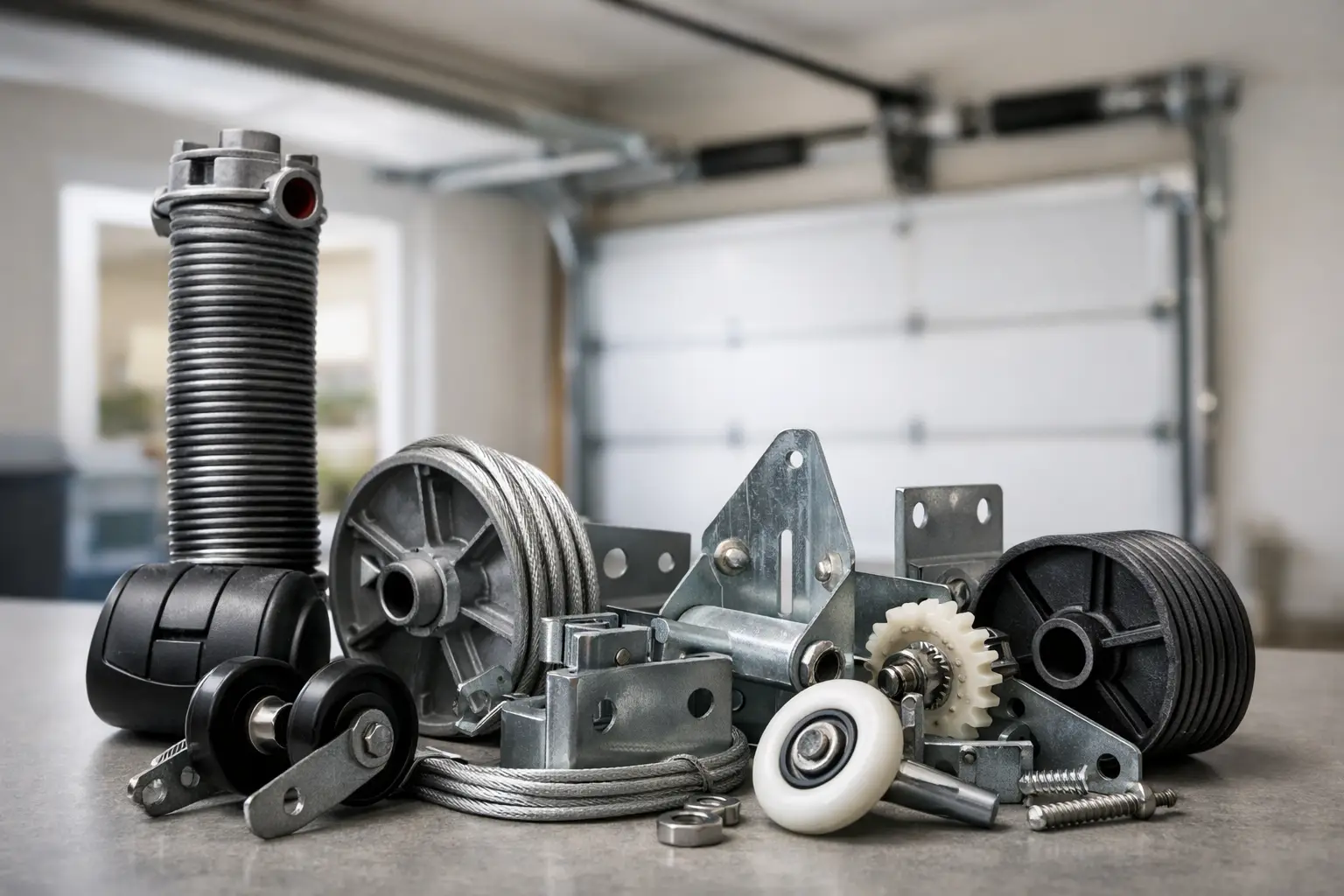
A garage door usually gets ignored until it stops halfway, starts grinding, or refuses to open when you are already late. That is why garage door parts explained in plain language can save you time, money, and a much bigger repair bill. When you know what each part does, it becomes easier to spot trouble early and make the right call.
Garage door parts explained for everyday owners
Most garage doors look simple from the outside, but the system is made up of several moving parts that have to work together under tension and weight. If one piece wears out, the strain often shifts to another. That is why a door that sounds slightly off today can become a safety issue faster than many people expect.
For homeowners and business owners, the goal is not to memorize every mechanical detail. It is to understand which parts handle movement, balance, control, and safety so you can describe symptoms clearly and avoid guessing.
The door sections and panels
The most visible part of the system is the door itself. Residential garage doors are often built from multiple sections, sometimes called panels, that bend as the door travels along the track. These sections may be steel, wood, aluminum, glass, or composite, and each material has trade-offs.
Steel is durable and low maintenance, but it can dent. Wood offers strong curb appeal, but it needs more upkeep in wet weather. Insulated doors help with energy efficiency and noise control, which matters more if the garage is attached to the home or used as a workspace.
If a panel is damaged, replacement may be possible, but it depends on the age of the door, the manufacturer, and whether matching sections are still available. In some cases, replacing one panel makes sense. In others, a full door replacement is the cleaner and more cost-effective option.
Hinges, rollers, and tracks
The door sections are connected by hinges, which allow the door to bend as it opens and closes. Rollers sit at the edge of the sections and move inside the tracks. The tracks guide the door from vertical to horizontal position.
When these parts are in good shape, the door moves smoothly and evenly. When they wear out, you may hear rattling, scraping, or popping. Nylon rollers tend to run quieter than metal ones, but both wear over time. Tracks can also shift if hardware loosens or the door takes an impact.
A bent track is not always a full replacement issue, but it should not be ignored. Misalignment can place extra stress on rollers, hinges, and the opener. If the door looks crooked or hesitates on one side, stop using it until it is inspected.
Springs do the heavy lifting
If there is one part that matters more than most people realize, it is the spring system. Garage door springs counterbalance the weight of the door, making it possible to lift manually and allowing the opener to guide the motion rather than force it.
There are two common types: torsion springs and extension springs. Torsion springs are mounted above the door opening and twist to store energy. Extension springs run along the horizontal tracks and stretch as the door moves. Torsion systems are more common on modern doors because they tend to offer smoother movement and better control.
Springs wear out from normal cycle use. A broken spring often shows up as a door that will not open, slams shut, or feels extremely heavy by hand. This is not a do-it-yourself repair. Springs are under high tension, and improper handling can cause serious injury.
Cables and drums
Cables work with the spring system to lift and lower the door safely. On torsion systems, the cables wrap around drums near the top corners of the door. As the spring turns, the drums rotate and pull the cables.
These cables are strong, but they are not permanent. Fraying, rust, and uneven wear are signs that service is needed. A snapped cable can leave the door hanging unevenly or jammed in place. Sometimes the cable itself is the obvious failure. Other times, the cable damage is a symptom of a bigger issue such as a worn drum, failing spring, or track problem.
The opener system and control parts
The opener does not carry the full weight of the door. Its job is to control the opening and closing motion once the spring system has balanced the load. That distinction matters because many people assume a struggling opener is the main problem, when the real issue is often a broken spring or dragging hardware.
The opener motor and rail
Most automatic openers include a motor unit, a rail, and a trolley that connects to the door arm. The motor drives the trolley along the rail to move the door. Chain-drive openers are dependable and widely used, belt-drive openers are quieter, and jackshaft openers mount on the wall beside the door instead of overhead.
If your opener hums but the door does not move, the issue could be the trolley, a stripped gear, a disconnected arm, or a balance problem in the door itself. If the opener strains every time it runs, it should be checked before the motor burns out.
Sensors, remotes, and wall controls
Modern openers also rely on safety and control components. Photo-eye sensors near the bottom of the opening stop the door from closing if something crosses the beam. Wall buttons, wireless keypads, remotes, and smart control systems handle access and convenience.
Sensor issues are common and often simple. Dirt on the lens, loose wiring, or slight misalignment can prevent the door from closing properly. If the lights blink and the door reverses, sensors are one of the first things to inspect. Smart accessories add convenience, but they also introduce more settings, batteries, and connectivity points that may need troubleshooting.
Weather seal and bottom rubber
Weather sealing does more than block drafts. The bottom seal helps keep out water, dirt, pests, and cold air, while perimeter seals close the gaps around the frame. In a rainy climate, worn seals can lead to moisture problems inside the garage and damage stored items.
This is one of the most affordable parts to replace, and it can make a noticeable difference. If you see daylight around the door or water tracking in after storms, the seals deserve attention.
What usually fails first
Wear patterns depend on door size, usage, climate, and maintenance habits. A busy family door may open several times a day, while a commercial door may cycle constantly. Springs, rollers, cables, and opener gears are common wear items because they handle repeated movement and load.
Rust speeds up failure, especially on exposed metal parts. Lack of lubrication can shorten the life of rollers and hinges. Impact damage from a vehicle can knock tracks out of alignment and create problems that continue long after the dent is forgotten.
Some failures are obvious, like a loud spring break. Others build slowly through noise, jerky movement, slower response, or a door that no longer sits level. Those early warnings matter because fixing one worn part is usually simpler than repairing the chain reaction that follows.
Repair or replace? It depends on the part
Not every garage door problem means you need a new door. Rollers, hinges, cables, seals, sensors, and many opener components can often be replaced without major disruption. Spring replacement is also common when the rest of the system is still in good condition.
The decision gets less straightforward when the door is older, multiple parts are failing, or the panel style is discontinued. If the door is damaged, poorly insulated, noisy, and unreliable, replacement may give you better long-term value than repeated service calls. If the issue is isolated and the door structure is sound, a targeted repair usually makes more sense.
An honest assessment should look at safety, cost, age, and performance together. That is where a professional inspection helps. A good technician will explain what failed, what caused it, and whether other components are close behind.
Garage door parts explained with safety in mind
Some maintenance tasks are simple. Keeping tracks clear, replacing remote batteries, cleaning sensor lenses, and watching for unusual movement are all reasonable for owners. Lubricating moving hardware with the right product can also help reduce wear.
But springs, cables, drums, and major track adjustments should be left to trained technicians. These parts store significant force, and small mistakes can cause damage or injury. If the door is stuck, crooked, or suddenly much heavier than normal, do not force it.
For property owners in the Seattle area, weather exposure and frequent use can put extra stress on moving components. That is one reason companies like Summit Garage Doors focus on both fast repair and practical guidance – not just getting the door moving again, but helping customers understand what failed and why.
The best time to learn how your garage door works is before it fails on a busy morning. A little clarity now makes it easier to spot warning signs, ask better questions, and choose the repair that actually fits the problem.

