
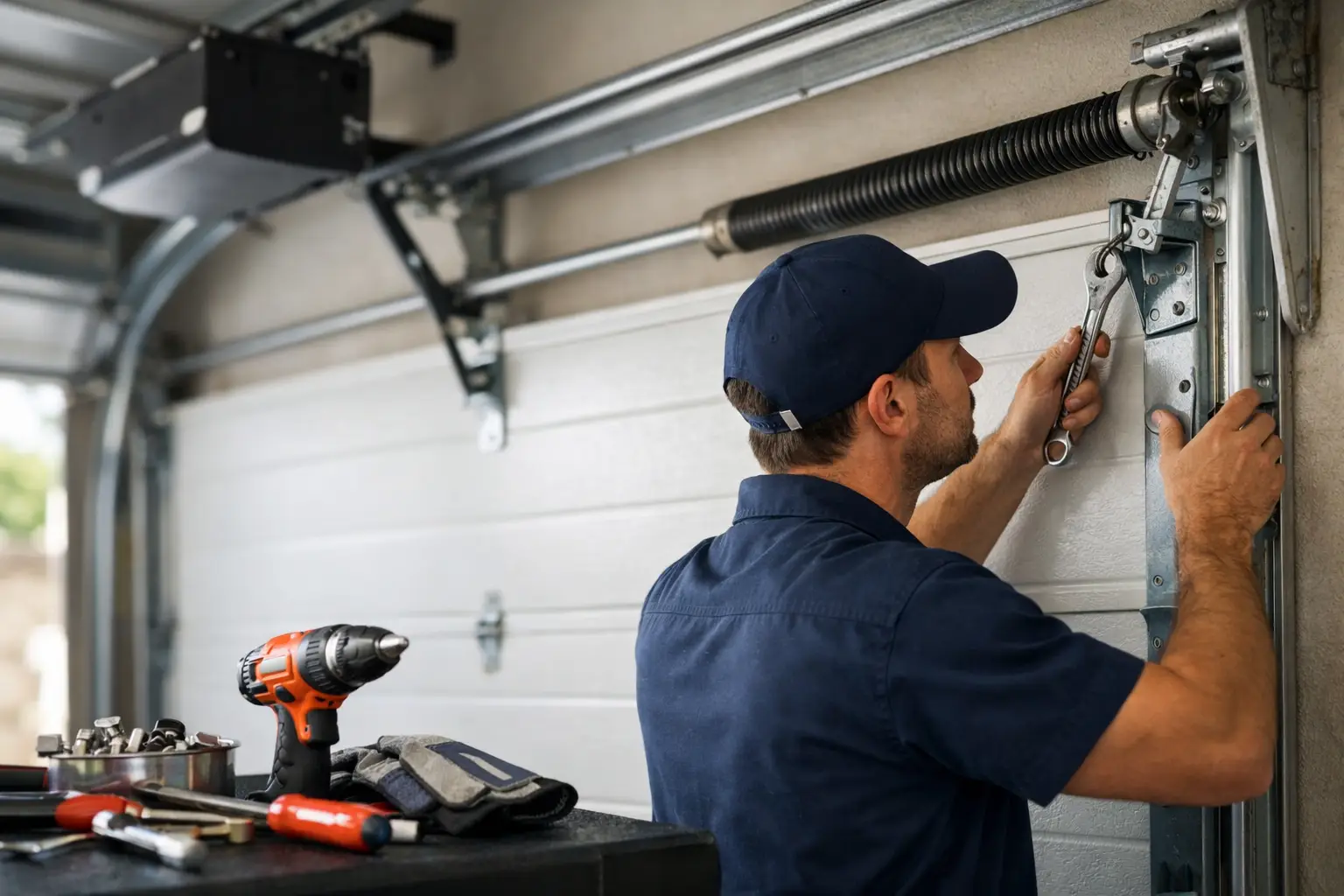
A garage door usually starts asking for attention long before it stops working. It gets louder, moves less smoothly, or hesitates on cold, wet mornings. If you want to know how to maintain garage door systems properly, the goal is simple – keep the door safe, quiet, and reliable before a small issue turns into a broken spring, off-track door, or opener failure.
For most homeowners, garage door maintenance does not mean taking the system apart. It means spotting wear early, cleaning what affects movement, and knowing which tasks are safe to handle yourself and which ones belong to a trained technician. That balance matters, because a garage door is one of the largest moving systems on your property, and some parts are under serious tension.
How to maintain garage door parts without taking risks
Start with a basic visual inspection. With the door closed, stand inside the garage and look at the springs, cables, rollers, hinges, tracks, and mounting brackets. You are not trying to diagnose every component. You are looking for clear warning signs such as frayed cables, loose hardware, bent track sections, rust buildup, cracked rollers, or hinges that look worn or misaligned.
If you see a broken spring or a cable that looks damaged, stop there. Those are not DIY items. Springs and cables can cause serious injury when handled incorrectly, and this is the point where professional service is the safer and more affordable decision.
If everything looks intact, move to operation. Open and close the door a few times and pay attention to how it sounds and how it travels. A healthy system should move evenly, without jerking, grinding, scraping, or slamming shut. One rough cycle can be a clue, but repeated noise or uneven motion usually means something is wearing out, drying out, or falling out of alignment.
Clean first, then lubricate
A lot of garage door problems start with dirt and neglect, not major mechanical failure. Tracks collect dust, leaves, and residue. Hinges and rollers dry out. Weatherstripping hardens and cracks. Maintenance works best when you clean before you lubricate.
Wipe the tracks with a clean cloth to remove debris. If there is stubborn buildup, use a mild household cleaner sparingly and dry the surface afterward. The goal is not to make the tracks slippery. In fact, you generally should not grease the tracks. Rollers need to roll, and tracks need to stay clean and unobstructed.
Lubrication belongs on moving hardware such as hinges, metal rollers, bearing plates, and springs if the manufacturer allows it. Use a garage-door-specific lubricant rather than heavy grease or a general-purpose oil that attracts grime. A light application is enough. Too much product creates buildup and can make future problems harder to spot.
After lubricating, run the door several times so the product distributes evenly. If the noise improves right away, you likely caught the issue early. If the door still groans, sticks, or shakes, lubrication alone is not the fix.
Test the door balance
One of the most useful maintenance checks is also one of the simplest. Disconnect the opener using the emergency release cord, then lift the door by hand to about halfway and let go carefully. A properly balanced door should stay in place or move only slightly.
If it drops quickly, feels unusually heavy, or shoots upward, the spring system may be out of balance. That puts strain on the opener and increases wear across the whole system. It also creates a safety issue. This is another case where a technician should step in rather than a homeowner making adjustments.
Balance problems are easy to ignore because the opener may still pull the door open for a while. But that extra strain shortens the life of the motor, gears, and connected hardware. In other words, one unresolved spring issue can lead to a more expensive repair later.
Check auto-reverse and safety sensors
Garage door maintenance is not only about smooth movement. It is also about safety. Modern openers should reverse when they detect resistance, and photo-eye sensors near the floor should stop the door from closing on a person, pet, or object.
To test auto-reverse, place a solid object such as a piece of wood flat on the floor under the centre of the door. Close the door using the opener. When the door touches the object, it should reverse promptly. If it does not, stop using the opener until the system is adjusted.
Then check the photo-eye sensors. Make sure both lenses are clean and pointed directly at each other. If the sensor lights are blinking or the door closes only when you hold the wall button, the sensors may be dirty, bumped out of alignment, or starting to fail. Cleaning is a safe first step. Rewiring or replacing components is usually better left to a pro.
Inspect weather seals and door panels
Maintenance is also about protecting the garage itself. Look at the bottom seal, perimeter weatherstripping, and the condition of the door panels. If you can see daylight around the edges when the door is closed, you are losing insulation and inviting in moisture, pests, and drafts.
In a climate with regular rain and damp conditions, worn seals can lead to water intrusion and faster material deterioration. Replacing weatherstripping is often straightforward, depending on the door style, and it can improve comfort and energy performance right away.
Door panels deserve a close look too. Small dents in steel doors may be cosmetic, but cracks in wood, warping, rust spots, or panel separation can affect how the door moves. If a panel issue changes the door’s alignment or weight distribution, it is no longer just an appearance problem.
Tighten hardware, but know the limit
Garage doors move up and down thousands of times over their lifespan. That vibration naturally loosens bolts and brackets. Using a socket wrench, you can carefully tighten accessible hardware on hinges and roller brackets. This is a practical part of routine upkeep.
What you should not touch are the red-painted or clearly marked components tied to spring tension, as well as bottom brackets connected to lift cables. Tightening ordinary hardware is maintenance. Adjusting high-tension hardware is repair work and should be treated differently.
If you are unsure which is which, the safest move is to stop before guessing. A quick service visit costs far less than an injury or a damaged door.
How often should you maintain a garage door?
For most homes, a light maintenance check every three to six months is enough. If the garage door is your main entry point, or if your household uses it multiple times a day, inspect it more often. Heavy use means faster wear.
Commercial and industrial doors usually need a tighter maintenance schedule because cycle counts are higher and downtime is more disruptive. In those settings, preventive service is not just about convenience. It helps avoid business interruptions and safety liability.
Seasonal changes matter too. Wet weather, temperature swings, and wind-driven debris can all affect door performance. In places like Seattle and across King County, extra attention to moisture, rust, and seal condition is especially worthwhile.
When maintenance is not enough
A well-maintained door can still develop problems. Parts wear out. Springs reach the end of their cycle life. Rollers crack. Openers lose force. Tracks shift after impact. The key is knowing when routine care has done its job and professional repair is now the right answer.
Call for service if the door is crooked, unusually heavy, making sharp banging sounds, reversing for no clear reason, or refusing to open or close consistently. The same applies if you notice a snapped spring, loose cable, bent track, or a door that has come off track. Those are not maintenance items. They are urgent repairs.
A good technician will not only fix the immediate issue but also check the surrounding components that may have been stressed by it. That matters because garage door problems often travel as a chain reaction. A failing roller can affect track wear. A weak spring can overwork the opener. A misaligned track can damage panels and hinges over time.
If you want the safest approach, think of maintenance as a habit and repair as a decision point. Clean the system, lubricate what should move, test the safety features, and pay attention when something changes. And when the door starts telling you it needs more than routine care, act early. That is how you keep your garage door dependable, protect your property, and avoid the kind of breakdown that never happens at a convenient time.

